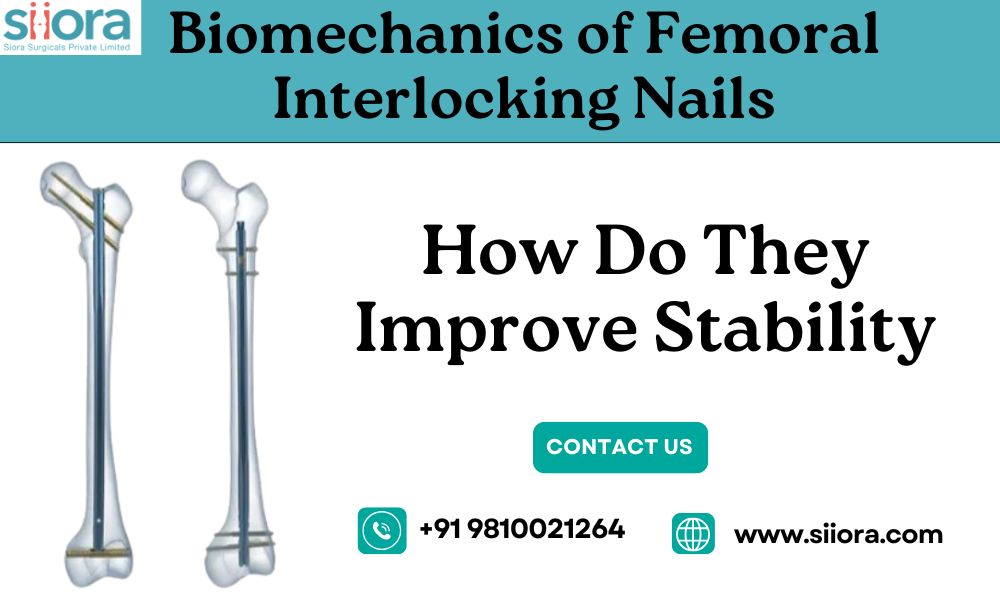
In the field of orthopedic trauma care, femur interlocking nails have revolutionized the way fractures of the femur are managed. Designed to provide optimal stability, these implants work in tandem with the body’s biomechanics to ensure proper healing and function. But how exactly do they enhance stability? To understand their significance, we must dive into their biomechanics and how they interact with bone structures.
Understanding the Biomechanics of the Femur
The femur, being the longest and strongest bone in the human body, plays a crucial role in weight-bearing and mobility. It must withstand significant mechanical forces, including compression, tension, shear, and torsion. A fracture in this bone disrupts its ability to function effectively, leading to pain, instability, and loss of movement.
When repairing a femoral fracture, it is essential to restore the bone’s structural integrity while allowing natural weight-bearing forces to stimulate healing. This is where femoral interlocking nails prove invaluable.
How do Femoral Interlocking Nails Enhance Stability?
Femoral interlocking nails are intramedullary implants designed to align and stabilize fractured bone segments. They work through a combination of load-sharing mechanics, locking mechanisms, and controlled micromotion, which collectively contribute to optimal healing.
Load Sharing and Stress Distribution
One of the key advantages of femoral interlocking nails is their ability to act as load-sharing devices. Unlike external fixation or plates, which take on most of the mechanical load themselves, interlocking nails distribute forces between the implant and the bone.
By being placed within the medullary canal, they mimic the natural weight-bearing axis of the femur. This positioning allows for even distribution of stress along the bone, reducing the risk of implant failure and promoting the formation of new bone at the fracture site.
Interlocking Screws for Axial and Rotational Stability
To enhance stability, femoral nails are designed with interlocking screw holes at both proximal and distal ends. These screws serve two main purposes:
- Axial Stability: Prevents shortening or telescoping of the bone segments by locking them in place.
- Rotational Stability: Stops unwanted twisting motions that could compromise healing.
By securing the fractured fragments, interlocking screws provide a rigid construct that resists mechanical forces acting on the femur, ensuring better alignment during recovery.
Controlled Micromotion for Bone Healing
While rigidity is important, complete immobilization of a fracture can slow down healing. The body requires controlled micromotion to stimulate callus formation—a key step in bone regeneration.
Femoral interlocking nails allow for a degree of controlled movement at the fracture site, facilitating secondary bone healing through callus formation. This balances stability and biological healing, leading to stronger bone remodeling over time.
Prevention of Implant-Related Stress Shielding
Stress shielding occurs when an implant bears too much of the mechanical load, leading to bone resorption and weakening of the surrounding bone tissue. Unlike rigid plating systems, femoral interlocking nails help maintain normal physiological loading patterns, preventing stress shielding and preserving bone density.
Resistance to Bending and Torsional Forces
Since the femur is subjected to various mechanical stresses during movement, an ideal fixation device must resist bending and torsional forces. Femoral interlocking nails, due to their cylindrical intramedullary placement and locking screw design, effectively counteract these forces.
Their biomechanical efficiency allows patients to begin early weight-bearing exercises, reducing the risk of complications like muscle atrophy, joint stiffness, and deep vein thrombosis.
What Are the Clinical Advantages of Femoral Interlocking Nails?
Beyond their biomechanical benefits, interlocking nails offer several clinical advantages:
- Minimally Invasive Procedure: Unlike traditional open fixation, femoral nailing requires smaller incisions, leading to reduced soft tissue damage and faster healing.
- Lower Risk of Nonunion: Their ability to promote callus formation decreases the chances of delayed healing or nonunion.
- Early Mobilization: Patients can start weight-bearing exercises sooner, leading to improved functional outcomes.
- Reduced Infection Risk: Since the implant is placed inside the bone, the risk of infection is lower compared to external fixation methods.
Conclusion
Femoral interlocking nails represent a biomechanically superior solution for stabilizing femoral fractures. By balancing load distribution, ensuring axial and rotational stability, allowing controlled micromotion, and preventing stress shielding, they significantly enhance fracture healing and functional recovery.
Their innovative design not only restores structural integrity but also empowers patients with quicker rehabilitation and improved mobility. As orthopedic implants and techniques continue to evolve, femoral interlocking nails remain a gold standard in fracture fixation, ensuring that patients regain their strength and movement with confidence.
 Siora Surgicals Pvt. Ltd.